


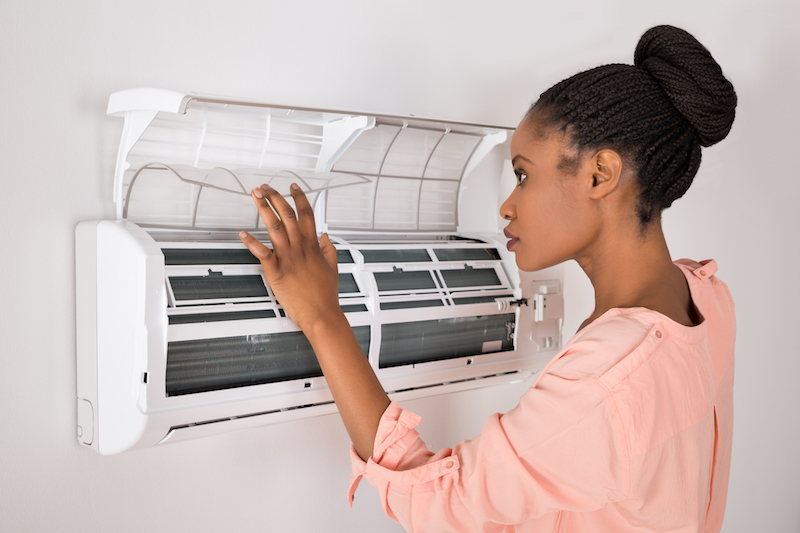
You shouldn’t have to sacrifice comfort or spend a lot to keep your residence at a refreshing setting during summer weather.
But what is the ideal temperature, exactly? We go over ideas from energy experts so you can select the best temperature for your home.
Here’s what we recommend for the most energy-efficient setting for air conditioning in Hasbrouck Heights.
Recommended Thermostat Settings for Summer
Most people find placing the thermostat at 72-73 degrees is most comfortable. However, if there’s a huge difference between your interior and outside temperatures, your cooling costs will be greater.
These are our recommendations based on the U.S. Department of Energy (DOE) and ENERGY STAR®.
While at home: 78 degrees. While that appears warm, there are ways you can keep your home pleasant without having the air conditioner running frequently.
Keeping windows and blinds closed during the day keeps cold air where it belongs—inside. Some window coverings, including honeycomb shades or plantation shutters, are created to deliver extra insulation and better energy efficiency.
If you have ceiling fans in your residence, the DOE says you can move thermostat settings about 4 degrees hotter without giving up comfort. That’s because they cool by a windchill effect. As they cool people, not spaces, turn them off when you leave a room.
If 78 degrees still feels too hot initially, try running a test for approximately a week. Get started by raising your temperature to 78 degrees while you’re at your residence. Then, gradually decrease it while using the ideas above. You may be amazed at how cool you feel at a higher temperature setting.
While away: 88 degrees. There’s no reason to keep the AC working all day while your home is empty. Switching the temperature 7–10 degrees warmer can save you an estimated 5–15% on your air conditioning bills, according to the DOE.
When you come home, don’t be tempted to set your thermostat below 78 to cool your residence more quickly. This isn’t productive and typically produces a bigger electrical cost.
A programmable thermostat is a useful method to keep your settings under control, but you need to set programs. If you don’t set programs, you might forget to increase the set temperature when you take off.
If you need a handy remedy, think over installing a smart thermostat. This thermostat connects with your phone, so it knows when you’re at your house and when you’re out. Then it intuitively changes temperature settings for maximum savings. How much exactly? An estimated $180 each year on heating and cooling, according to ENERGY STAR.
Another perk of using a smart thermostat? You can use your phone to keep an eye on and adjust temperature settings from nearly anywhere.
While sleeping: Around 70 degrees. While ENERGY STAR suggests 82 degrees, that could be unbearable for most families. The majority of people sleep better when their sleeping space is cold, so that’s why the National Sleep Foundation suggests 65–68 degrees. But that may be too cold, depending on your clothing and blanket preference.
We advise using an equivalent test over a week, moving your thermostat higher and progressively lowering it to locate the best temp for your family. On pleasant nights, you may learn keeping windows open at night and relying on a ceiling fan is a better solution than running the AC.
More Approaches to Conserve Energy During Warm Weather
There are extra ways you can save money on utility bills throughout hot weather.
- Upgrade to an energy-efficient AC system. Central air conditioners only are effective for about 12–15 years and get less efficient as they get older. A new air conditioner can keep your home more comfortable while keeping electricity bills small.
- Schedule annual air conditioner maintenance. Annual air conditioner maintenance keeps your unit operating like it should and could help it work more efficiently. It can also help prolong its life span, since it allows techs to uncover seemingly insignificant issues before they create a major meltdown.
- Change air filters often. Follow manufacturer instructions for replacing your air filter. A dusty filter can cause your system to short cycle, or turn on and off too frequently, and raise your cooling.
- Measure attic insulation levels. Nearly 90% of houses in the United States don’t have proper insulation, according to the Insulation Institute. The majority of southern climates should have 13–14” of attic insulation, while northern climates should have 16–18”.
- Have your ductwork inspected. Ductwork that has separated over time can seep cool air into your attic, walls or crawl space. This can result in major comfort troubles in your house, like hot and cold spots.
- Seal openings, doors and windows. Keep warm air where it belongs by sealing cracks. You can also caulk or weather strip doors to seal more conditioned air indoors.
Use Less Energy This Summer with ACE Solutions
If you are looking to conserve more energy this summer, our ACE Solutions professionals can assist you. Get in touch with us at 201-347-7533 or contact us online for extra info about our energy-saving cooling solutions.